

क्या Freelancers को GST Register करनी पड़ती है? ₹20 लाख Rule Explained (2026)
Freelancers, creators, YouTubers और side hustlers — यह ₹20 लाख वाला GST rule आपको पता होना चाहिए।
— InnaMax News Team✍️
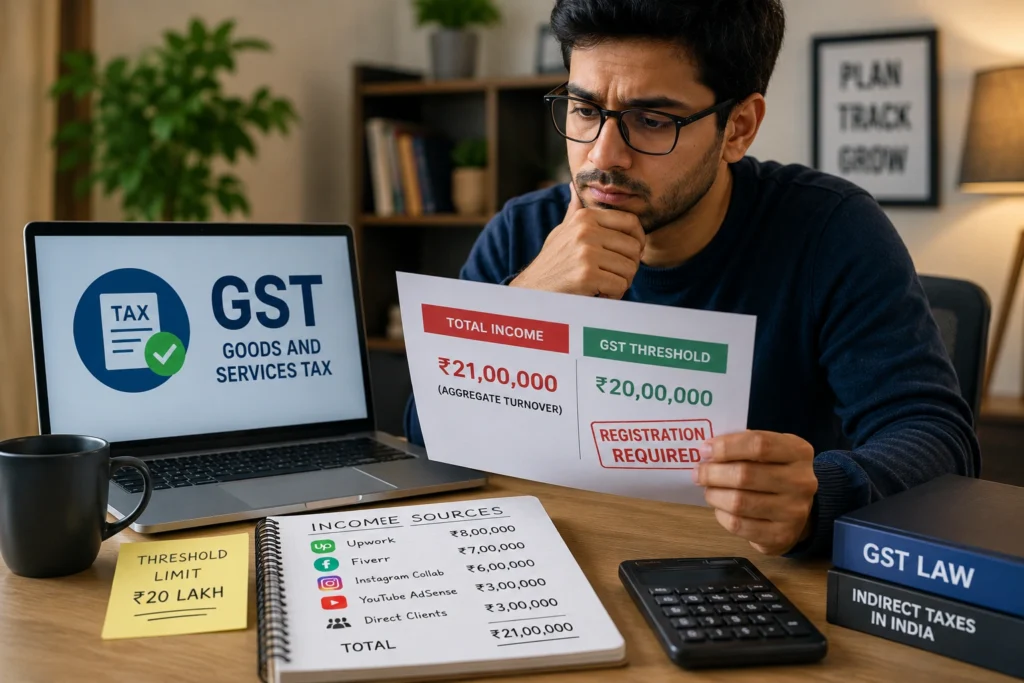
आपने पिछले साल Upwork पर ₹8 लाख कमाए। Fiverr से ₹7 लाख आए। Instagram collaborations से ₹6 लाख अलग। यानी total income हुई ₹21 लाख।
लेकिन शायद आपने सोचा होगा — “मैं तो बस freelancing कर रहा हूँ… GST मुझ पर कहाँ लागू होगी?”
और honestly, यहीं सबसे ज़्यादा लोग गलती कर बैठते हैं।
India में freelancers और creators के बीच सबसे बड़ी tax confusion यही है — GST आखिर कब compulsory होती है, और कब नहीं। कई लोगों को इसका पता तब चलता है जब कोई client GSTIN माँग देता है या फिर compliance notice आ जाता है।
Problem यह है कि इस एक rule को ignore करना आगे चलकर ₹10,000 से लेकर लाखों की penalty तक पहुँचा सकता है।
तो चलिए, इस पूरे GST confusion को एक बार simple language में समझते हैं।
Freelancers सबसे ज़्यादा GST में कहाँ Confuse होते हैं?
Side hustles अब सिर्फ experiment नहीं रहे। पिछले कुछ सालों में India की creator economy और freelancing culture इतनी तेजी से grow हुई है कि 2026 तक estimated 1.5 करोड़+ freelancers active माने जा रहे हैं — Upwork, Fiverr, Toptal, Instagram, YouTube, और direct clients के through।
लेकिन यहाँ सबसे interesting बात यह है कि इनमें से बहुत से लोगों को अभी भी यह clear नहीं होता कि किस point के बाद GST registration legally mandatory हो सकती है।
Usually यहाँ लोग दो extremes में चले जाते हैं।
पहला — “मैं तो बस side hustle कर रहा हूँ, GST मुझ पर apply नहीं होती।”
और honestly, यह assumption काफी risky हो सकती है।
दूसरा — “अगर मैंने तुरंत GST register नहीं कराई तो बड़ी legal problem हो जाएगी।”
यह भी कई बार unnecessary panic बन जाता है।
Reality इन दोनों के बीच में है। बस वही line समझनी ज़रूरी है।
Freelancers के लिए ₹20 लाख Rule इतना Important क्यों है
India में services provide करने वाले किसी भी person के लिए — चाहे वो full-time freelancer हो, student side hustle कर रहा हो, या फिर नौकरी के साथ extra income कमा रहा हो — GST registration आमतौर पर तब mandatory हो जाती है जब उनका aggregate turnover ₹20 लाख per financial year cross कर जाए।
यहीं से ज़्यादातर freelancers पहली बार GST rules को seriously देखना शुरू करते हैं।
हालाँकि, कुछ special category states में यह threshold ₹10 लाख तक हो सकती है। इसलिए अगर आप ऐसे states से operate कर रहे हैं, तो rules थोड़ा अलग तरीके से apply हो सकते हैं।
Practical advice यही है कि latest applicability और state-specific GST rules को official guidelines या किसी qualified CA से verify कर लेना बेहतर रहता है।
“Aggregate Turnover” — यही चीज़ सबसे ज़्यादा Confusion पैदा करती है
यहीं सबसे ज़्यादा confusion होती है। और honestly, कई freelancers को GST rules समझने में सबसे बड़ा issue इसी term की वजह से आता है।
Aggregate turnover का मतलब सिर्फ किसी एक platform की income नहीं होता। इसका मतलब है — सालभर में आपके सभी income sources की combined value।
Simple example देखें:
Upwork से ₹7 लाख + Fiverr से ₹6 लाख + Instagram brand deal से ₹5 लाख + YouTube AdSense से ₹3 लाख = total ₹21 लाख
अब यहाँ important बात यह है कि भले ही किसी एक platform से income ₹20 लाख से कम हो, फिर भी combined turnover threshold cross कर सकता है। और यहीं GST registration वाली condition trigger हो सकती है।
GST rules में aggregate turnover के अंदर आमतौर पर taxable supplies, exempt supplies, exports, और inter-state supplies शामिल मानी जाती हैं। लेकिन इसमें taxes खुद include नहीं होते — यानी GST amount अलग रहती है।
एक और small detail — inward supplies पर जो tax आपने RCM (Reverse Charge Mechanism) के under pay किया हो, वो इसमें count नहीं किया जाता।

क्या Upwork, Fiverr और YouTube Income पर GST लगती है?
यह शायद वो question है जो almost हर Indian freelancer कभी न कभी Google पर search करता है —
“Upwork या Fiverr income पर GST लगती है क्या?”
तो इसे simple language में समझते हैं।
Upwork और Fiverr Income — Export of Service कैसे मानी जाती है?
Upwork और Fiverr पर होने वाला काम अक्सर foreign clients के लिए होता है — जैसे US, UK, Australia या Canada की companies और individuals। ऐसे कई cases में यह income export of services category में आ सकती है।
Good news यह है कि exports को GST में generally zero-rated माना जाता है। यानी अगर आपके clients foreign हैं, payment proper foreign currency में receive हो रही है, और documentation सही maintain किया गया है, तो आमतौर पर clients से GST collect नहीं करनी पड़ती।
लेकिन यहाँ एक important catch आता है।
कई freelancers यह मान लेते हैं कि “foreign client = GST rules नहीं लगेंगे।” Practically, बात इतनी simple नहीं होती।
ज्यादातर freelancers के लिए, अगर overall aggregate turnover threshold cross हो जाता है, तो GST registration mandatory हो सकती है। यहाँ एक चीज़ समझना ज़रूरी है — GST registration और GST charge करना दोनों अलग obligations हैं।
Simple language में:
Threshold cross हो → registration की जरूरत पड़ सकती है।
Zero-rated export → client से GST collect नहीं करनी पड़ सकती।
और क्योंकि export-related GST rules कई बार case-specific हो सकते हैं, इसलिए higher income cases में CA से guidance लेना हमेशा safer रहता है।
YouTube AdSense Income पर GST लगती है?
YouTube AdSense Income पर GST लगती है?
YouTube AdSense income आमतौर पर Google Ireland Ltd. के through आती है। इसी वजह से कई cases में इसे भी export of service माना जाता है। Practical terms में देखें तो ऐसी income पर अक्सर directly GST collect करने की जरूरत नहीं पड़ती।
लेकिन यहाँ creators सबसे ज़्यादा confuse हो जाते हैं।
क्योंकि YouTube income सिर्फ AdSense तक limited नहीं रहती। जैसे:
- Indian brands के sponsored videos
- channel memberships
- Super Thanks
- paid promotions
इन सबका GST treatment अलग तरीके से evaluate हो सकता है — especially जब payment Indian entities या Indian users से linked हो।
इसीलिए, अगर आपकी creator income multiple sources से आ रही है, तो assumptions बनाने के बजाय किसी qualified CA से specific guidance लेना ज्यादा safe रहता है।
Instagram Brand Deals — Indian और Foreign Clients में फर्क समझें
यहाँ थोड़ा carefully differentiate करना ज़रूरी है, क्योंकि Instagram collaborations में GST treatment हर case में same नहीं होता।
अगर आप किसी Indian brand के साथ collaboration कर रहे हो — यानी आपने किसी Indian company को invoice raise किया, campaign deliver किया, और payment India से receive हुई — तो इसे आमतौर पर domestic service माना जाता है। ऐसे cases में normal GST rules apply हो सकते हैं। अगर आप registered हैं, तो client GSTIN और invoice details भी माँग सकता है।
वहीं दूसरी तरफ, अगर कोई foreign brand — जैसे US या UK की company — आपसे Instagram content बनवा रही है और payment foreign currency (USD आदि) में आ रही है, तो कई situations में इसे export of service treat किया जा सकता है। ऐसे cases अक्सर zero-rated category में आते हैं।
लेकिन practically speaking, creators के लिए सबसे important चीज़ platform नहीं, बल्कि client की location होती है।
Simple language में समझें तो:
- Indian client → domestic GST rules apply हो सकते हैं
- Foreign client → export treatment possible हो सकता है
और अंत में, आपका overall aggregate turnover ही decide करता है कि GST registration की requirement trigger होगी या नहीं।
₹20 लाख Cross हुआ और GST Register नहीं की तो?
अगर आपका aggregate turnover ₹20 लाख cross कर चुका है और आपने अभी तक GST registration नहीं कराई, तो issue सिर्फ compliance का नहीं रहता — आगे चलकर practical problems भी शुरू हो सकती हैं।
सबसे पहले आता है financial penalty का risk। CGST Act Section 122 के under कई situations में penalty ₹10,000 या due tax के 100% तक जा सकती है — जो भी amount ज्यादा हो।
इसके अलावा unpaid tax पर interest भी लग सकता है, जो सामान्यतः 18% per annum तक माना जाता है।
लेकिन honestly, freelancers के लिए सबसे stressful चीज़ कई बार penalty नहीं, बल्कि unnecessary scrutiny बन जाती है। GST notices, income-tax crosschecks, future audits — ये सब situations avoid करना ही बेहतर होता है।
और एक practical reality भी है जिसे बहुत लोग ignore कर देते हैं।
Serious B2B clients — agencies, corporates, funded startups — अक्सर freelancers से GSTIN माँगते हैं। कई companies की internal policy ही ऐसी होती है कि वे unregistered vendors के साथ काम avoid करती हैं।
मतलब simple है — side hustle अगर अब serious income बन रहा है, तो compliance को भी उतनी ही seriously लेना पड़ेगा। यही चीज़ freelancing को hobby से professional career की तरफ ले जाती है।
तो आखिर GST Register कब करनी चाहिए?
अभी Register करो अगर:
- आपका aggregate annual turnover ₹20 लाख के आसपास पहुँच चुका है (कुछ special category states में यह limit ₹10 लाख हो सकती है)
- Indian corporate clients, agencies या startups आपसे GSTIN माँगने लगे हैं
- आप interstate या export services provide कर रहे हैं, और compliance structure properly maintain करना चाहते हैं
- आप voluntarily GST registration लेकर Input Tax Credit (ITC) का benefit लेना चाहते हैं
- या फिर आप freelancing को long-term professional setup की तरह build करना शुरू कर चुके हैं
ऐसे situations में किसी qualified CA से advice लेकर GST registration process समझ लेना practical step हो सकता है।
Wait कर सकते हो अगर:
- अगर सभी platforms और income sources मिलाकर भी आपकी annual income अभी ₹20 लाख से कम है
- आपके clients पूरी तरह foreign हैं और payments proper foreign currency में receive हो रही हैं
- अभी freelancing या side hustle सिर्फ exploration phase में है, और turnover अभी ₹15 लाख threshold के आसपास भी नहीं पहुँचा
तो कई cases में तुरंत panic करने की जरूरत नहीं होती।
लेकिन यहाँ एक smart move यह रहता है कि जैसे ही आपका turnover धीरे-धीरे ₹15 लाख के करीब आने लगे, उसी समय किसी qualified CA से बात शुरू कर दी जाए।
क्योंकि practical level पर GST registration process में आमतौर पर 3–7 working days लग सकते हैं। Last moment पर rush करने से documents, compliance और invoicing में unnecessary confusion शुरू हो सकती है।
GST Registration Process — Quick Guide
GST registration process उतना complicated नहीं है जितना कई freelancers शुरुआत में सोचते हैं।
Generally process कुछ इस तरह काम करता है:
GST.gov.in → New Registration → Form GST REG-01
इसके लिए आमतौर पर ये documents चाहिए होते हैं:
- PAN card
- Aadhaar
- bank account details
- business address proof
Application submit होने के बाद एक ARN (Application Reference Number) generate होता है। उसके बाद verification process complete होने पर सामान्यतः 3–7 working days में GSTIN issue हो सकता है।
और हाँ — बहुत से नए freelancers यह सोचते हैं कि registration की कोई yearly fee होगी।
Practical answer: GST registration की कोई annual fee नहीं होती।
लेकिन registration के बाद filing responsibilities आती हैं। Returns quarterly होंगी या monthly — यह आपके turnover structure और filing category पर depend करता है।

Disclaimer: GST rules कई cases में situation-specific हो सकती हैं। इसलिए final compliance decision लेने से पहले किसी qualified CA या official GST guidance से details verify करना बेहतर रहता है।
यह भी पढ़ें
• AI se Paise Kaise Kamayein India
• Remote Work Reality India 2026
• Side Hustle Tax India — ITR Filing Guide
• Gig Economy India — Freelancer Reality 2026
AI से Interview Prep — Smart Candidates क्या अलग कर रहे हैं
Closing — GST से डरने की नहीं, समझने की ज़रूरत है
Honestly, GST उतनी scary चीज़ नहीं है जितना internet पर कई बार लगता है। अधिकांश freelancers के लिए शुरुआत सिर्फ एक simple number से होती है — ₹20 लाख।
बस इस number को track करते रहो। और जैसे ही turnover उसके आसपास पहुँचने लगे, उसी समय proper guidance लेकर आगे बढ़ो — panic में नहीं।
क्योंकि side hustle जब serious income बनना शुरू करता है, तब compliance भी professional journey का हिस्सा बन जाती है।
और यही transition freelancing को casual experiment से real career की तरफ ले जाता है।
Next in Side Hustle Cluster: GST registration के बाद invoicing कैसे काम करती है, quarterly returns क्या होती हैं, और freelancers practical level पर ITC (Input Tax Credit) का फायदा कैसे उठा सकते हैं — यह सब अगली story में। Coming soon on InnaMax News.