
Salary Negotiation में पैसा कैसे बढ़ाएं: The Complete 2026 Guide for Indian Professionals
Salary Negotiation 2026: Indian Workplace में Salary कैसे बढ़ाएं — Practical Step-by-Step Guide
Salary Growth Series — Career Earnings Acceleration
In this CVcon series:
• Salary Negotiation Complete Guide
• Engineering vs Management Salary Track
Salary negotiation India में अभी भी uncomfortable topic माना जाता है, लेकिन research बताती है कि जो professionals negotiate करते हैं, वे average 10-15% अधिक salary earn करते हैं। फिर भी लगभग 68% Indian employees negotiation ही नहीं करते, इसलिए कंपनियाँ naturally lowest acceptable salary offer कर देती हैं।
यह guide आपको सिखाएगा — Know your worth, ask at the right time, and negotiate respectfully — Indian workplace culture के अनुसार।
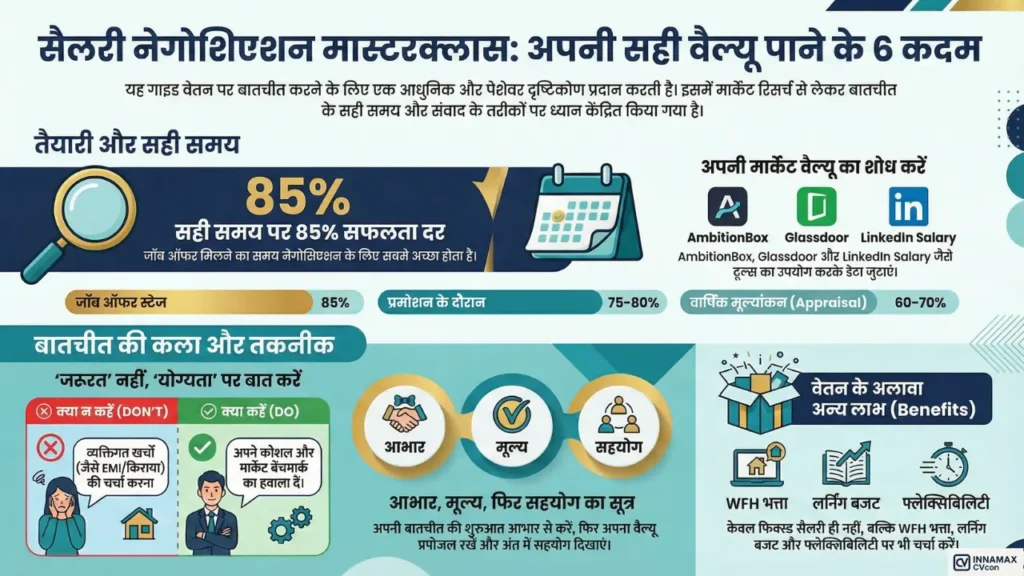
Market Research: पहले अपनी value जानिए
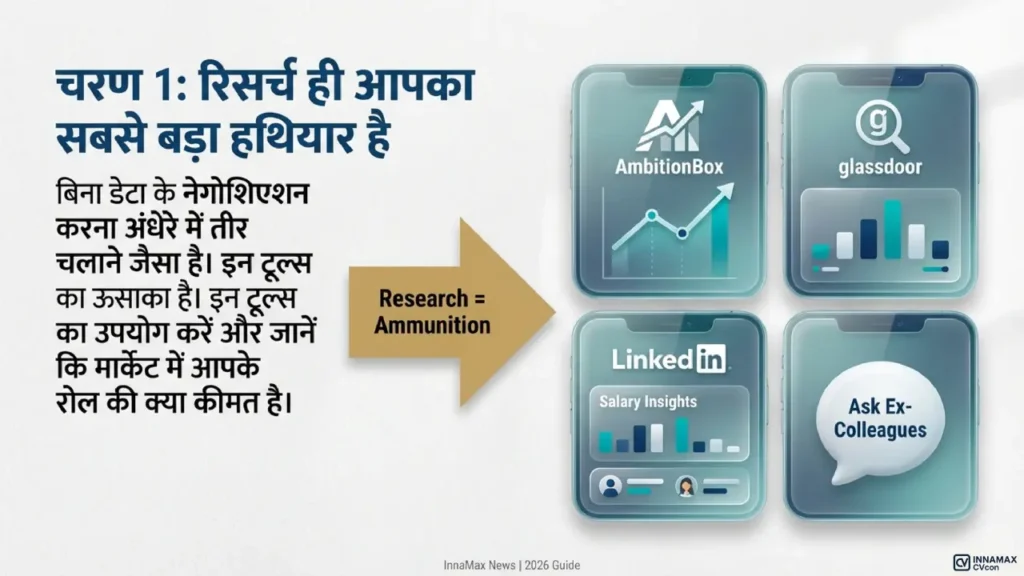
Negotiation शुरू करने से पहले यह जानना जरूरी है कि market आपकी skill के लिए कितना pay कर रहा है।
Practical tools:
- LinkedIn Salary insights
- Glassdoor India
- AmbitionBox salary reports
- Peer comparison (same role colleagues)
Rule:
यदि आपका current salary market median से 10-20% नीचे है, तो negotiation strongly justified है।
Deep Guide: Salary Benchmark Research Tools for India (Coming Soon)
Timing Strategy: कब negotiate करें
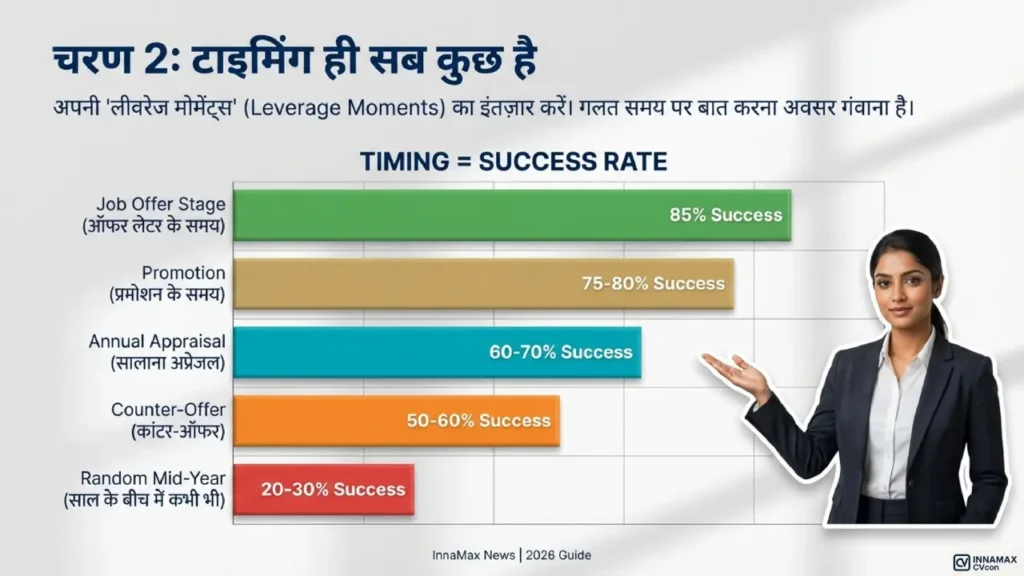
Wrong timing negotiation को reject करा सकता है।
Best timing:
- Job offer मिलने के बाद (accept करने से पहले)
- Appraisal cycle से 1–2 महीने पहले
- Promotion discussion के समय
- New project responsibility लेने के बाद
Avoid:
Company layoffs, financial crisis, or poor performance review periods.
Related: Appraisal Salary Increase Strategy (Coming Soon)
Indian Workplace Culture: Respectful Negotiation Strategy
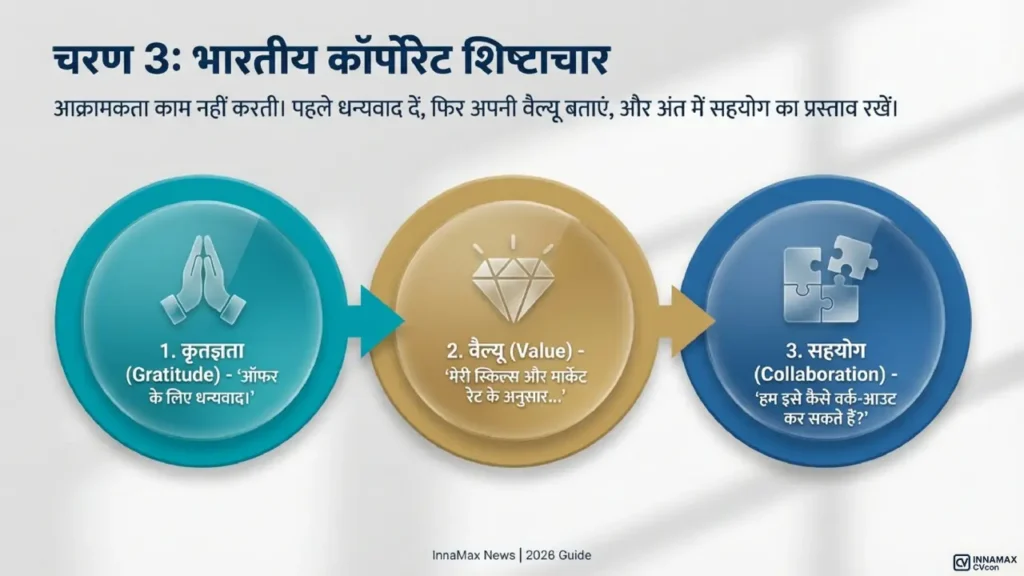
Indian offices में relationship-first culture चलता है।
Golden approach:
- Demand नहीं — discussion करें
- Contribution highlight करें
- Boss की constraints समझें
- Written email के साथ polite tone रखें
Example framing:
❌ “Mujhe salary increase chahiye”
✅ “Based on my recent contributions and market benchmarks, I would like to discuss compensation alignment.”
Copy-Paste Email Templates (Indian Context)
Template 1 — Appraisal Discussion Request
Subject: Compensation Review Discussion Request
Dear [Manager Name],
Over the past year I have worked on [project/result]. Based on my responsibilities and current market benchmarks, I would appreciate an opportunity to discuss my compensation during the upcoming appraisal cycle.
Looking forward to your guidance.
Regards,
[Name]
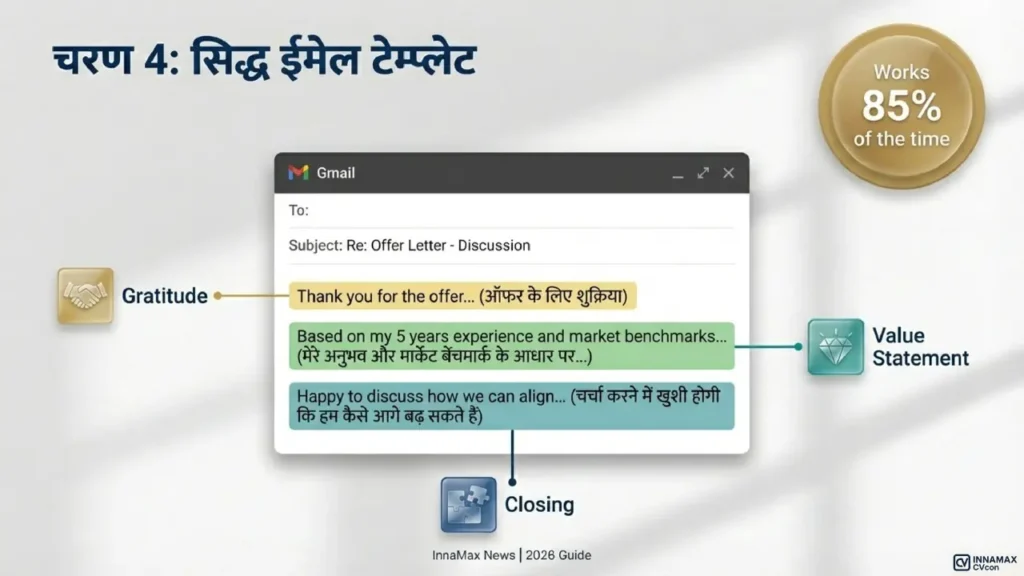
Template 2 — Offer Negotiation
Dear [HR Name],
Thank you for the offer. I am very excited about the role. Based on my experience and current market range for similar roles, I wanted to check if the compensation can be reviewed in the range of ₹X – ₹Y.
I would be happy to discuss further.
Regards,
[Name]
Template 3 — Promotion Role Expansion
Dear [Manager],
As my responsibilities have expanded to include [new tasks], I would like to request a discussion on aligning my compensation with the updated role expectations.
Thank you for your support.
[Name]
Template 4 — Counter-Offer Scenario
Dear [HR],
I am genuinely interested in joining your organization. I have received another offer in the range of ₹X, and I wanted to check if there is flexibility to revise the compensation before I finalize my decision.
Warm regards,
[Name]
Resource: Salary Negotiation Email Template Library (Coming Soon)
Common Mistakes (जो लोग पैसा lose करते हैं)
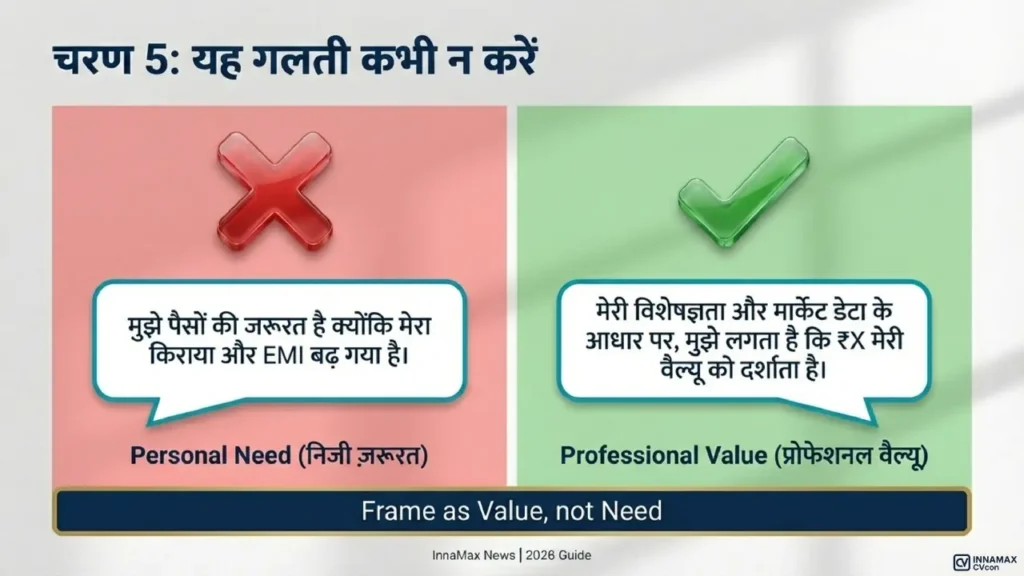
- Personal need mention करना (“family expenses”)
- Without research negotiation करना
- Early negotiation (offer मिलने से पहले)
- Emotional tone
- No written follow-up
Correct framing:
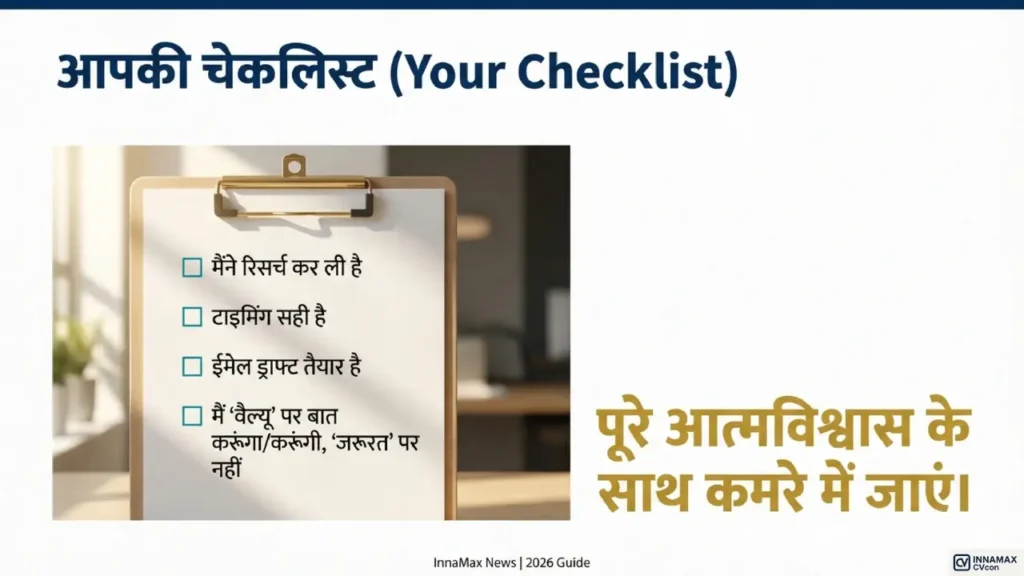
Value-based negotiation > Need-based negotiation
Counter-Offer Strategy (Multiple Offers)
- Never bluff
- Written offer wait करें
- Preferred company को transparent but polite information दें
- Only realistic difference negotiate करें (5-15%)
Decision Guide: Should You Accept a Counter Offer? (Coming Soon)
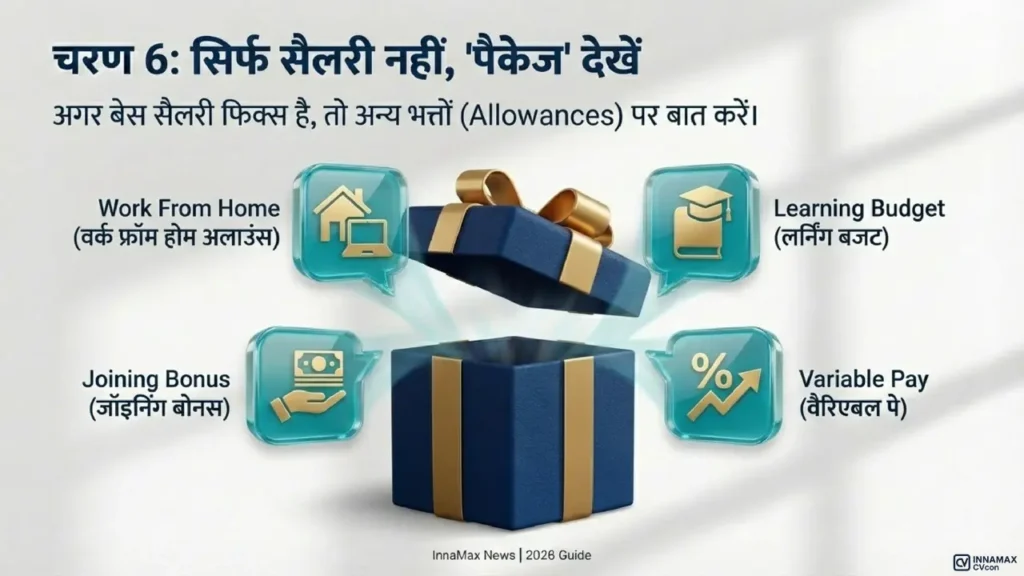
Non-Salary Benefits भी negotiate करें
यदि salary fixed हो:
| Benefit | Negotiable Range |
|---|---|
| Remote allowance | ₹5,000–15,000/month |
| Learning budget | ₹50,000–1,00,000/year |
| Joining bonus | 1–3 months salary |
| Extra leaves | 3–7 days |
| Work-from-home flexibility | Hybrid agreement |
Compensation Strategy: Non-Salary Benefits Negotiation Guide India (Coming Soon)
Decision Matrix — Negotiate या Accept?
Negotiate if:
- Market gap >10%
- Role responsibilities higher
- Multiple offers
- Strong performance record
Accept if:
- Above market offer
- Probation pending
- Company growth stage uncertain
- Learning opportunity exceptional
Women Professionals Special Insight
India में women 40% कम negotiate करती हैं, जिससे long-term salary gap बढ़ता है।
Practical advice:
- Market data prepare रखें
- Written communication prefer करें
- Mentors से pre-discussion करें
- Assertive but polite tone रखें
Final Insight
Salary negotiation confrontation नहीं है — यह career skill है। सही preparation के साथ Indian professionals हर appraisal cycle में 10-20% additional earnings unlock कर सकते हैं।
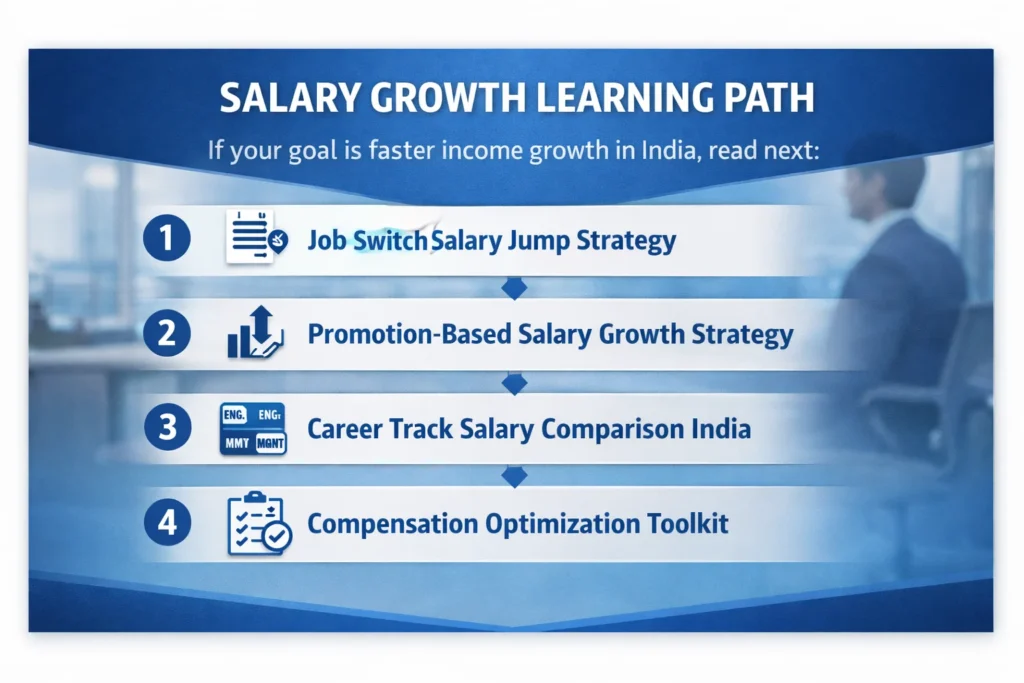
Salary Growth Learning Path
If your goal is faster income growth in India, read next:
- Job Switch Salary Jump Strategy
- Promotion-Based Salary Growth Strategy
- Career Track Salary Comparison India
- Compensation Optimization Toolkit
━━━━━━━ARTICLE ENDS HERE ━━━━━━━━
Related Reading:
- Engineering vs Management: किसमें Future? — Complete Career Guide
- Remote Work vs Office: What Indian Companies Are Really Thinking in 2026 (Coming Soon)

Frequently Asked Questions (FAQ)
1. Should I negotiate salary for every job offer?
Yes. Even if the offer seems good, most companies keep 10–15% negotiation room in their budget. Negotiating professionally rarely harms your chances and often improves your final compensation.
2. How much salary hike should I ask for in India?
A realistic negotiation range is 10–20% above the offered salary, depending on:
- Market benchmarks
- Your experience level
- Competing offers
- Specialized skills demand
3. What is the best time to negotiate salary?
The best moments are:
- After receiving the job offer (before accepting)
- During annual appraisal cycles
- When responsibilities increase or promotion discussions begin
4. Can negotiating salary lead to offer withdrawal?
Very rarely, if negotiation is polite, data-backed, and reasonable. Aggressive or unrealistic demands are more likely to create issues than professional discussions.
5. What if the company says salary is fixed?
You can still negotiate:
- Joining bonus
- Remote work allowance
- Learning and certification budget
- Extra leaves
- Early salary review (6 months instead of 12)
6. Should freshers negotiate salary?
Freshers can negotiate modestly, especially if:
- They have multiple offers
- Specialized technical skills
- Strong internship/project experience
Even a ₹20,000–₹40,000 increase compounds significantly over time.
7. How do I negotiate salary without sounding demanding?
Use value-based framing, such as:
“Based on my experience and market benchmarks, I was hoping we could explore compensation in the range of ₹X–₹Y.”
8. Is salary negotiation different for women professionals?
Women often negotiate less frequently due to workplace perception challenges. Using data-backed salary benchmarks, collaborative tone, and written negotiation emails significantly improves outcomes.