

Engineering vs Management: किसमें Future? — Complete Career Guide
क्या technical expert बनें या team leader? 60% engineers management में shift करते हैं first 7 years में – but is it right? Complete data-backed analysis with salary comparisons and decision framework.
Engineering की degree लेकर management में switch करूँ या technical track पर रहूँ? यह सवाल आज हर दूसरे Indian professional के मन में है.
According to industry data, 60% of engineering graduates in India shift to management roles within their first 7 years of career – लेकिन केवल 40% consciously यह decision लेते हैं.
IIM Ahmedabad की recent study के अनुसार, 40% first-time managers पहले 2 सालों में burnout महसूस करते हैं क्योंकि technical work से people management में transition एक completely different skill set माँगता है.
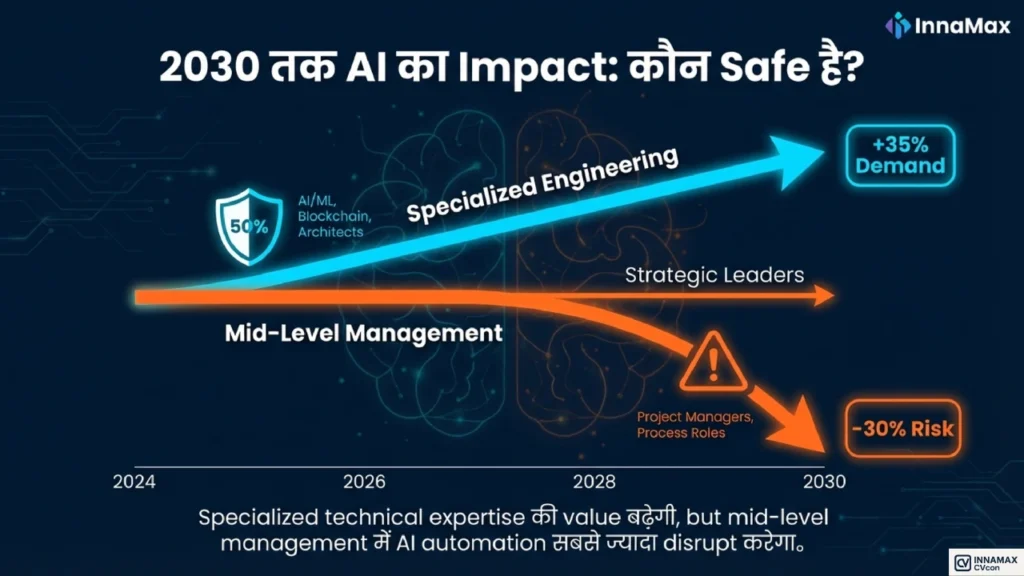
NASSCOM की 2024 report बताती है कि 2030 तक AI automation के कारण middle management roles में 30% reduction expected है, जबकि specialized technical roles में 35% growth forecast है.
इस comprehensive guide में हम analyze करेंगे: real salary progressions (₹5 लाख से ₹2 करोड़ तक), career growth trajectories, AI impact on both tracks, work-life balance realities, और most importantly – आपके लिए कौन सा path सही है, यह कैसे decide करें.
Data-backed insights के साथ, Indian tech industry के real examples और expert opinions.
🎧 पूरी Career Guide InnaMax Voice पर सुनें:→
Engineering vs Management: किसमें Future? — Audio Career Guide
पूरा लेख पढ़ें →
Engineering Track: Technical Expertise का Power
Engineering में रहने का मतलब है specialized skills में master बनना.
Senior software engineers, data scientists, या solution architects की demand market में consistently high रहती है.
Google, Microsoft, और Indian tech companies में L7-L8 level के engineers ₹80 लाख से ₹2 करोड़ तक कमा रहे हैं – बिना किसी team management की headache के.
Bangalore की एक leading e-commerce company में Principal Engineer Rajesh (name changed) बताते हैं: “मैंने deliberately manager बनने से मना किया. आज मेरी salary manager से ज्यादा है, और मैं वही काम करता हूँ जो मुझे पसंद है – coding और architecture.”
यह Individual Contributor (IC) track का reality है जो बहुत कम लोग जानते हैं.
यहाँ ध्यान दें: Technical track में growth के लिए continuous learning ज़रूरी है. Technologies हर 2-3 साल में evolve होती हैं, और relevant रहने के लिए आपको भी evolve करना होगा.
Management Track: Leadership और Scale का Game
Management में switch का सबसे बड़ा advantage है impact.
एक team lead 10 लोगों के काम को guide करता है, एक manager 50-100 लोगों के output को shape करता है.
Indian corporate culture में अभी भी “manager” title की value है – LinkedIn पर connections से लेकर family gatherings में respect तक.
पर reality check: IIM की एक recent study बताती है कि 40% first-time managers पहले 2 साल में burnout महसूस करते हैं.
Technical work से people management में shift एक completely different skill set माँगता है – conflict resolution, stakeholder management, और difficult conversations.
[smartslider3 slider=”31″]
See Slider👉 Engineer vs Manager: कौन सा Career Path सही?
पैसे की बात: Long-term Earnings Comparison
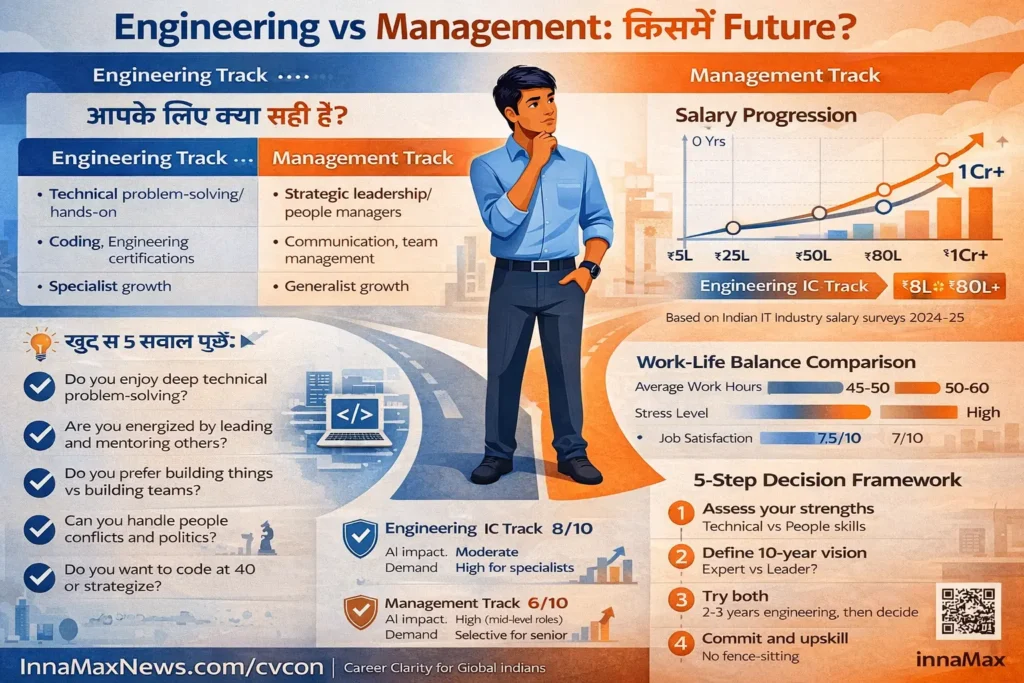
यहाँ सच्चाई है जो कोई नहीं बताता: पहले 5 सालों में engineers और managers की salary लगभग same रहती है.
Difference 7-10 साल के बाद आता है.
Top-tier engineers (Staff/Principal level) ₹60-80 लाख कमाते हैं stable roles में, जबकि senior managers ₹50-70 लाख range में होते हैं – plus variable pay और ESOPs.
लेकिन peak earnings में management track आगे निकल जाता है.
VP/Director levels पर total compensation ₹1-3 करोड़ तक जा सकता है.
हालाँकि, यह सभी को नहीं मिलता.
Engineering track में consistency ज्यादा है – good technical skills हैं तो 90% probability है आप ₹50+ लाख तक पहुँच जाएंगे.
Pro Tip: अगर आपने engineering track चुना है, तो 5th year के बाद consciously decide करें कि IC track पर रहना है या management में जाना है. यह “accidental management” से बचने का best time है जब promotion के नाम पर unwanted manager role मिल जाता है.
Future of Work: 2030 तक क्या बदलेगा?
AI और automation का सबसे बड़ा impact mid-level management पर होगा.
Project tracking, resource allocation, और basic decision-making में AI tools पहले से ही managers की जगह ले रहे हैं.
NASSCOM की report के अनुसार, 2030 तक middle management roles में 30% reduction expected है.
Engineering में भी disruption आएगा, but differently.
Low-code/no-code tools basic development को democratize करेंगे, लेकिन complex problem solving और system design के लिए skilled engineers की demand बढ़ेगी.
Niche specializations – AI/ML, blockchain, quantum computing – में experts की value exponentially बढ़ने वाली है.
Key Takeaways
Engineering vs Management का सही answer है: “It depends on YOU.”
अगर आपको technical challenges solve करना, deep work करना, और expertise build करना पसंद है – engineering track phenomenal है और financially भी rewarding.
अगर आपको लोगों के साथ काम करना, strategy बनाना, और बड़े teams को lead करना excite करता है – तो management आपका path है.
याद रखें: Both tracks में success possible है, लेकिन दोनों को साथ लेकर चलने की कोशिश करना is the worst strategy.
Choose deliberately, commit fully, और continuously evolve.
📖इस Topic को और गहराई से समझें: Complete Career Analysis Audio में सुनें
📚 Career Clarity की और कहानियाँ:
- MBA vs Job Experience: कौन सा रास्ता चुनें? [/LINK] — Engineering के बाद MBA करना है या 2-3 साल काम करके? Data-backed analysis
- Salary Negotiation: Indian Context में कैसे करें? [/LINK] — Job switch या promotion में अपनी value कैसे communicate करें
- Startup vs MNC: किस में है Career Growth? [/LINK] — Stability vs Learning – Indian tech ecosystem में smart choice कैसे करें

CVcon: Global Indians के लिए career clarity और practical guidance presented by InnaMax News