
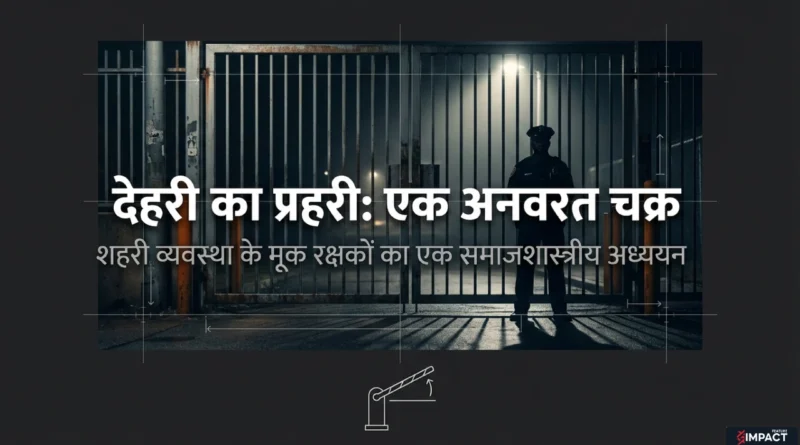
Presence Without Authority: Security Guards और शहर की अदृश्य सुरक्षा
Impact Feature | Invisible Worker Series | Episode 2
यह लेख Invisible Worker Series का हिस्सा है — एक श्रृंखला जो शहर को चलाने वाले उन कामों को समझती है जिन्हें हम रोज़ देखते हैं, पर अक्सर समझ नहीं पाते।
Why India’s cities depend on security guards without giving them real authority—and what it means for urban safety.
इस श्रृंखला का पहला एपिसोड यहाँ पढ़ें: Safai Karamchari – शहर जागने से पहले, वे काम पर होते हैं
भारत के urban spaces—malls, hospitals, offices, gated societies—लगभग पूरी तरह private security guards पर depend करते हैं।
फिर भी, उनकी legal authority, pay structure और decision-making power सीमित रहती है।
यह gap आज इसलिए matter करता है क्योंकि cities पहले से ज्यादा secured दिखती हैं, लेकिन accountability और dignity अब भी unclear है।
इस कथा का Audio संस्करण InnaMax Voice पर सुनें →
Society Guard: बिना अधिकार वाली मौजूदगी
पूरा लेख पढ़ें →
शहर सुरक्षित दिखता है, पर सुरक्षा किसके कंधों पर?
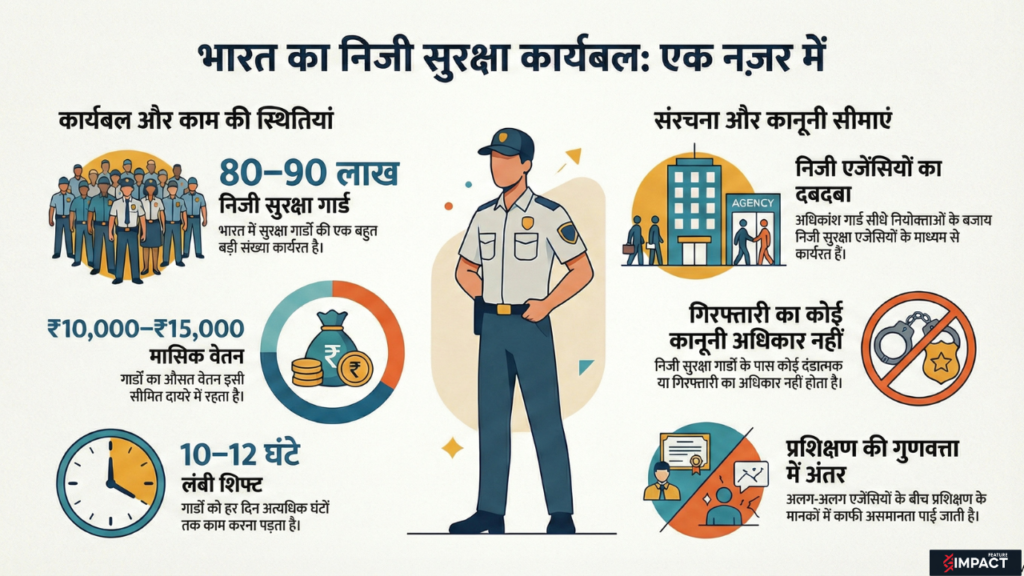
भारत में private security guards अब urban infrastructure का permanent हिस्सा बन चुके हैं। Residential societies, commercial complexes, schools, hospitals, warehouses—हर जगह uniform में खड़े guards दिखाई देते हैं। अनुमान के मुताबिक भारत में private security workforce 80–90 लाख के बीच है, जो कई state police forces से भी बड़ी संख्या है।
फिर भी, यह workforce formal power structure के बाहर operate करती है। Guards visible हैं, responsible हैं, लेकिन authority के बिना।
Responsibility ज़्यादा, Authority सीमित
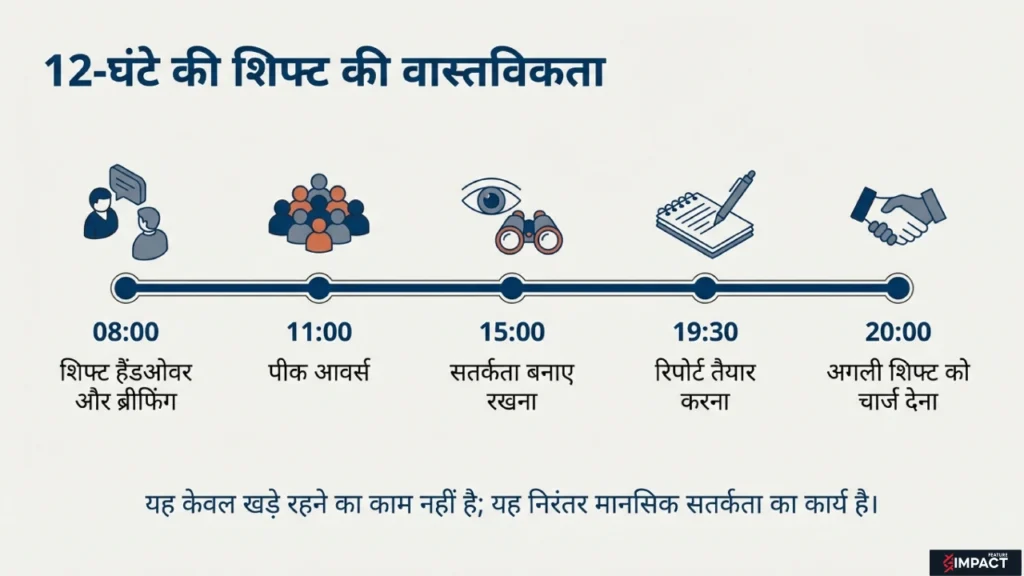
Security guards के roles broadly defined हैं—entry control, visitor logging, basic surveillance, emergency alerting।
लेकिन ground reality में उनसे expectations कहीं ज़्यादा होती हैं:
- Residents expect discipline enforcement
- Management expects risk prevention
- Visitors expect guidance
- Police expect reporting, not intervention
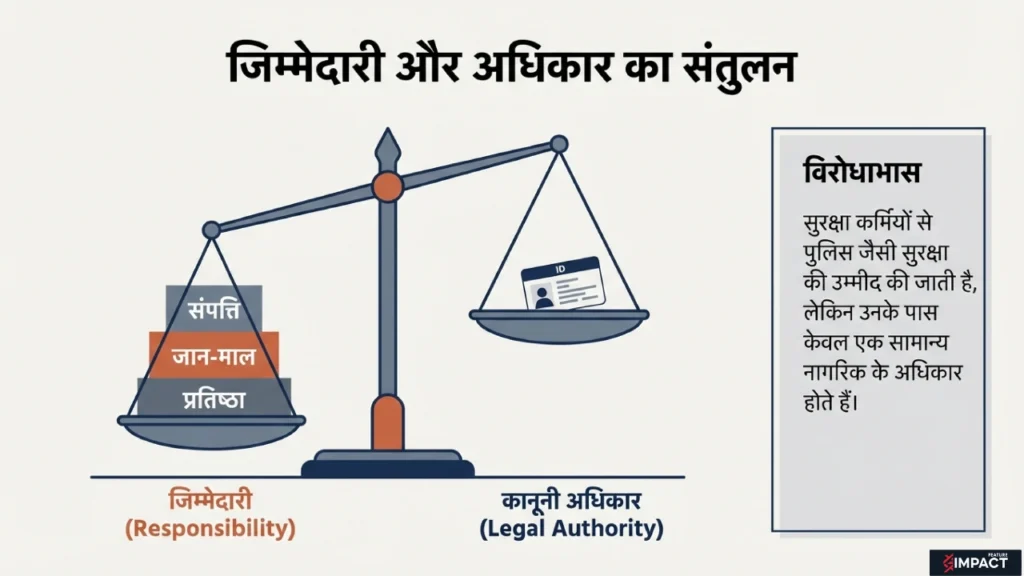
Despite this, guards के पास ना arrest power होती है, ना penalty impose करने का अधिकार।
Most guards earn ₹10,000–₹15,000 per month in urban India, often with long shifts (10–12 hours), limited weekly offs, और minimal training refreshers।
Training standards agencies के हिसाब से vary करते हैं—basic drills, soft skills, कुछ legal awareness—but enforcement uneven है।
[smartslider3 slider=”29″]
See Slider 👉 अदृश्य प्रहरी – जो दिखते हैं, पर गिने नहीं जाते
“Presence Without Authority” क्यों बन गया norm?
Urban India ने security को outsourced visibility की तरह treat किया है।
Uniform reassurance देता है—एक psychological signal कि space controlled है।
लेकिन legal framework guards को intentionally limited authority देता है, ताकि misuse न हो।
Problem यह है कि responsibility और authority का imbalance systemic बन गया है।
Guard को कहा जाता है:
- “Gate control करो”
- “Suspicious activity report करो”
- “Emergency में alert रहो”
पर जब situation escalate होती है—argument, trespassing, minor violence—guard का role suddenly shrink हो जाता है:
“Police को बुलाओ.”
यह structure guards को buffer बनाता है—first contact, last control नहीं।
Risk, Burnout और Accountability Gap
इस model का सबसे बड़ा consequence है accountability confusion।
- Incident होने पर सवाल guard से पूछे जाते हैं
- Decision लेने का अधिकार guard के पास नहीं होता
- Legal responsibility unclear रहती है
Result:
- Guards defensive behavior adopt करते हैं
- Over-compliance या complete withdrawal
- High attrition rates in private security jobs
City residents को safety illusion मिलता है, real security ecosystem fragmented रहता है।
Informal Authority, Formal Dependence
Security guards अकेले नहीं हैं।
Delivery personnel, sanitation workers, facility staff—urban India में कई roles हैं जहाँ presence essential है, power optional।
Security guards इस pattern का sharpest example हैं क्योंकि risk visibly high है, लेकिन authority structurally capped।
Rethinking Urban Security Design
Cities को security को सिर्फ manpower नहीं, system की तरह treat करना होगा:
- Clear SOPs for escalation
- Defined legal protections during duty
- Standardized training benchmarks
- Wage rationalization linked to responsibility
यह police replacement नहीं है, बल्कि layered security architecture की बात है।
Why This Matters Now
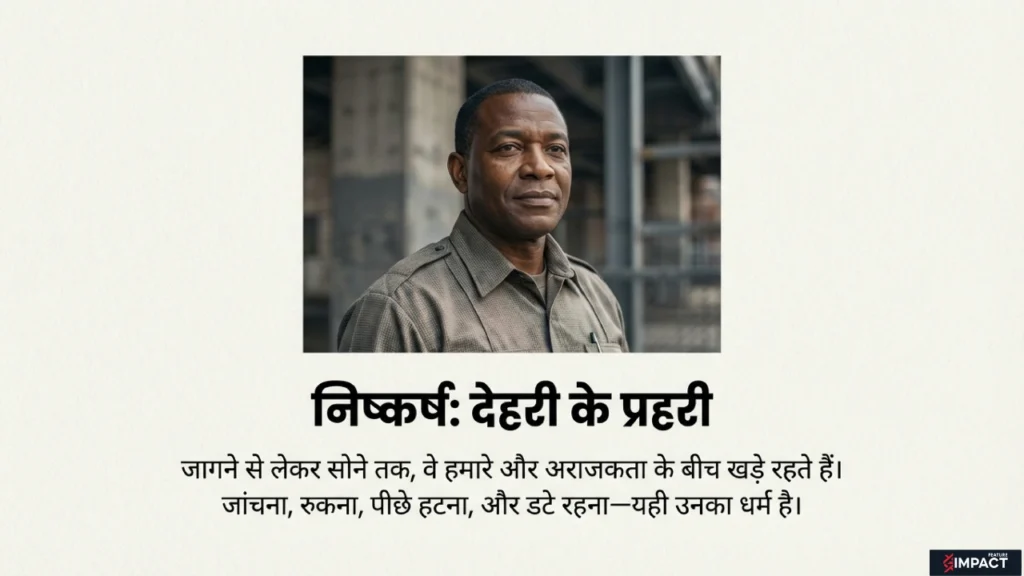
As cities grow vertically and privately managed spaces increase, private security guards de facto frontline बनते जा रहे हैं।
Without addressing authority gaps, urban safety symbolic बनी रहेगी—functional नहीं।
👤 AUTHOR – Impact Feature Desk| InnaMax News
अगले एपिसोड में:
शहर की रफ्तार को चलाने वाले डिलीवरी वर्कर्स —
जहाँ हर ऑर्डर का टाइम ऐप तय करता है,
लेकिन इंसान की थकान और जोखिम स्क्रीन पर दिखाई नहीं देते।
Episode 3 — Delivery Worker: Speed That Hides Human Cost